
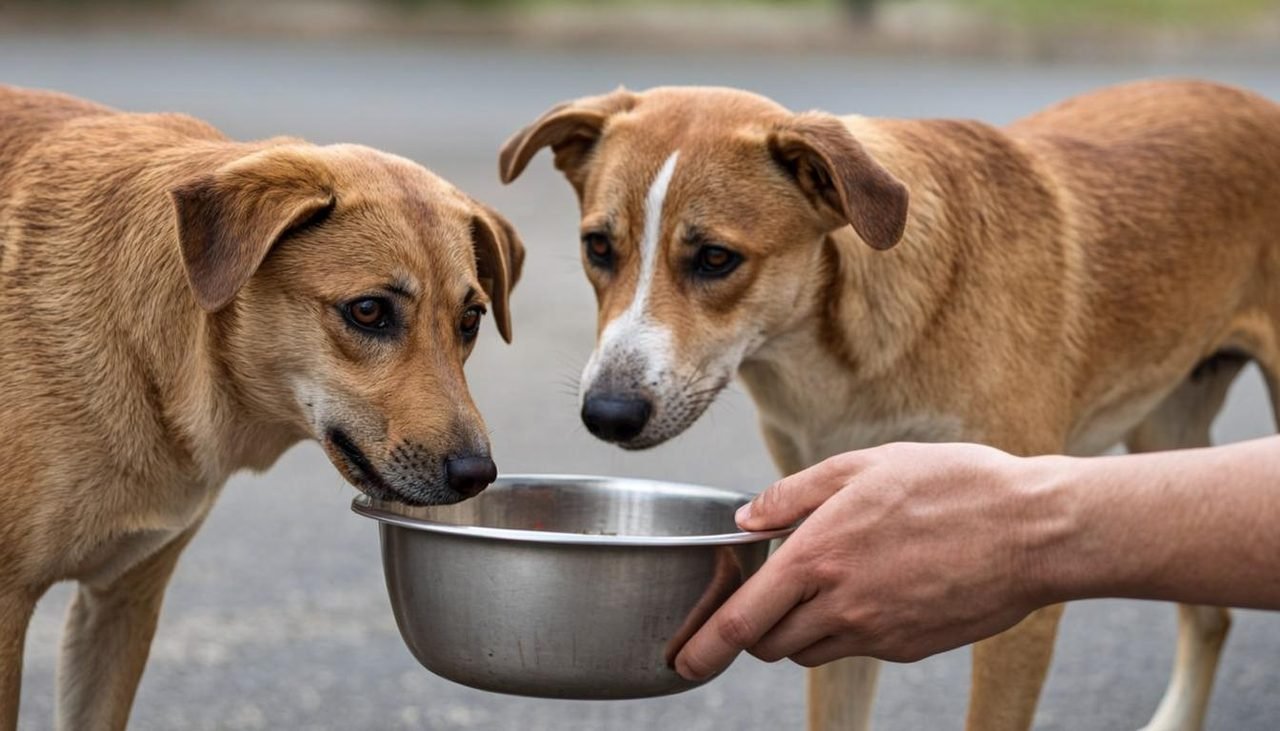
Kindness needs a little know-how
Anyone who has watched a dog wait hopefully beside a food stall knows the pull to do something. That pull is worth acting on — regularly fed animals are healthier, calmer and better adjusted to sharing space with people. The goal of this article is simply to make sure your help lands where it should. Responsible helping has three ingredients: consistency, hygiene and consideration — for the animal, for the neighbourhood and for the helpers who may come after you.
Feeding stray animals the right way
If you decide to feed community animals, a few simple habits make an enormous difference:
- Pick a fixed spot and time. Animals learn routines quickly. Feeding at the same place and roughly the same time means they wait calmly instead of roaming or begging aggressively.
- Choose the location carefully. Feed away from busy roads, building entrances and children's play areas. A quiet corner benefits everyone — the animal can eat in peace, and residents are not inconvenienced.
- Keep it clean. Use bowls where possible, and clear away leftover food and packaging after feeding. Unclean feeding spots attract pests and generate complaints that ultimately hurt the animals.
- Provide water, always. In Indian summers, water matters even more than food. A refilled bowl in the shade can save lives on days when temperatures soar.
- Be consistent. An animal that is fed once and then ignored for a week has been taught to hope and then disappointed. If you cannot feed daily, coordinate with neighbours or a local caregiver so coverage is steady.
- Be considerate of your neighbours. Communicate with residents' associations where they exist. Most objections to feeding dissolve when feeding points are clean, calm and away from doorways.
What to avoid
- Feeding beside traffic. Animals lured to roadsides for food face a constant risk of accidents.
- Harmful foods. Cooked bones can splinter; heavily spiced or oily leftovers upset stomachs; large amounts of milk cause digestive trouble; chocolate, onions and grapes are toxic to dogs. Simple, bland food — rice, roti, plain biscuits soaked in water, or quality dog food — is safest.
- Suddenly handling fearful animals. A stray animal that has never been touched may bite out of fear, not aggression. Let trust develop gradually.
- Relocating animals. Moving an animal to an unfamiliar area strips it of its territory and social group, and usually results in disorientation and worse suffering. Help where the animal is.
Recognising when an animal needs more than food
Not every problem can be solved with a bowl. Learn to read the signs that an animal needs outside help: visible wounds or limping, severe mange or hair loss, extreme thinness, lethargy, discharge from eyes or nose, an animal lying still for unusually long periods, or very young puppies and kittens alone without their mother. In these cases, the most responsible step is to contact a local veterinarian, an animal welfare group or an experienced community rescuer — and, if you cannot reach help immediately, to keep a watchful, calm eye from a respectful distance. Our article on the importance of veterinary care covers what to look for in more depth.
Helping with, not against, your community
The most sustainable help is organised help. When two or three households coordinate a feeding schedule, animals get daily coverage and caregivers get rest. When residents' associations are kept informed, feeding points survive. And when the community collectively supports sterilisation and vaccination efforts — often run by municipal bodies and welfare organisations — the street animal population itself becomes healthier and more stable over time. Consider talking to your neighbours: shared kindness is stronger, easier and more durable than solitary kindness.
Key takeaways
- Feed at fixed, clean, low-traffic spots — and keep water available, especially in summer.
- Avoid roadside feeding, harmful foods and sudden handling of fearful animals.
- Never relocate a street animal; help it where it lives.
- Know the signs that an animal needs veterinary help, and call experienced help early.
- Coordinate with neighbours — organised kindness is sustainable kindness.
Please note: this article offers general guidance for everyday situations and is not a substitute for professional advice. For injuries, illness or behavioural concerns, contact a qualified veterinarian or an experienced animal welfare organisation.